
Did You Know? The modern diver down flag was created in the United States during the 1950s as recreational scuba diving rapidly expanded. Its simple red background and white diagonal stripe quickly became one of the most recognized boating safety symbols in North America, helping protect divers by warning nearby boaters that people are beneath the surface.
Whether you’re an experienced diver, a weekend boater, or simply curious about the origins of one of the most recognizable safety symbols on the water, understanding the history of the dive flag offers a fascinating look at how recreational diving changed boating forever. As scuba diving became increasingly popular during the 1950s, the need for a clear warning system also grew. Today, the familiar red flag with its white diagonal stripe continues helping protect divers while reminding boaters to stay alert and respect those below the surface.
The Early Days of Recreational Scuba Diving
✔ Boat diving
✔ Shore diving
✔ State laws vary
✔ Always check local regulations
The Early Days of Recreational Scuba Diving
Recreational scuba diving began gaining popularity after World War II as new underwater breathing equipment made exploring beneath the surface more accessible. As more people discovered coral reefs, shipwrecks, and marine life, diving quickly evolved from a specialized activity into a favorite pastime for adventurers around the world.
At the same time, boating also became increasingly popular, resulting in more vessels and divers sharing the same waterways. Consequently, a greater need for safety awareness emerged as underwater recreation continued to grow.
Why Divers Needed a Warning System
Unlike boats traveling across the surface, divers are often impossible to see once they enter the water. Without a clear warning, nearby boaters had no reliable way of knowing when people were below the surface, increasing the risk of accidents.
As recreational diving expanded throughout the 1950s, a simple and highly visible safety solution became necessary. Eventually, the familiar red diver down flag was introduced to alert nearby boaters, encourage caution, and help protect everyone enjoying the water.
Who Created the Diver Down Flag?
Historically, Denzel James Dockery is widely credited with introducing the red diver down flag in the early 1950s. After witnessing the increasing number of recreational divers sharing waterways with boat traffic, Dockery recognized the need for a highly visible warning flag that could be easily recognized from a distance. His simple red design featuring a white diagonal stripe quickly gained popularity throughout the diving community and eventually became the standard diver down flag used across much of North America.
How the Dive Flag Became a Boating Safety Standard
As recreational diving continued to grow, the diver down flag became widely accepted by dive organizations, boating communities, and safety agencies throughout North America. Its simple design made it easy to recognize from a distance, allowing boaters to quickly identify areas where divers were below the surface.
Over time, many states incorporated the diver down flag into their boating regulations, helping establish consistent safety practices on lakes, rivers, and coastal waters. Today, it remains one of the most recognized symbols of responsible diving and safe boating. There are varying laws and regulations regarding diving and the use of dive flags. So be sure to check them out in your area.

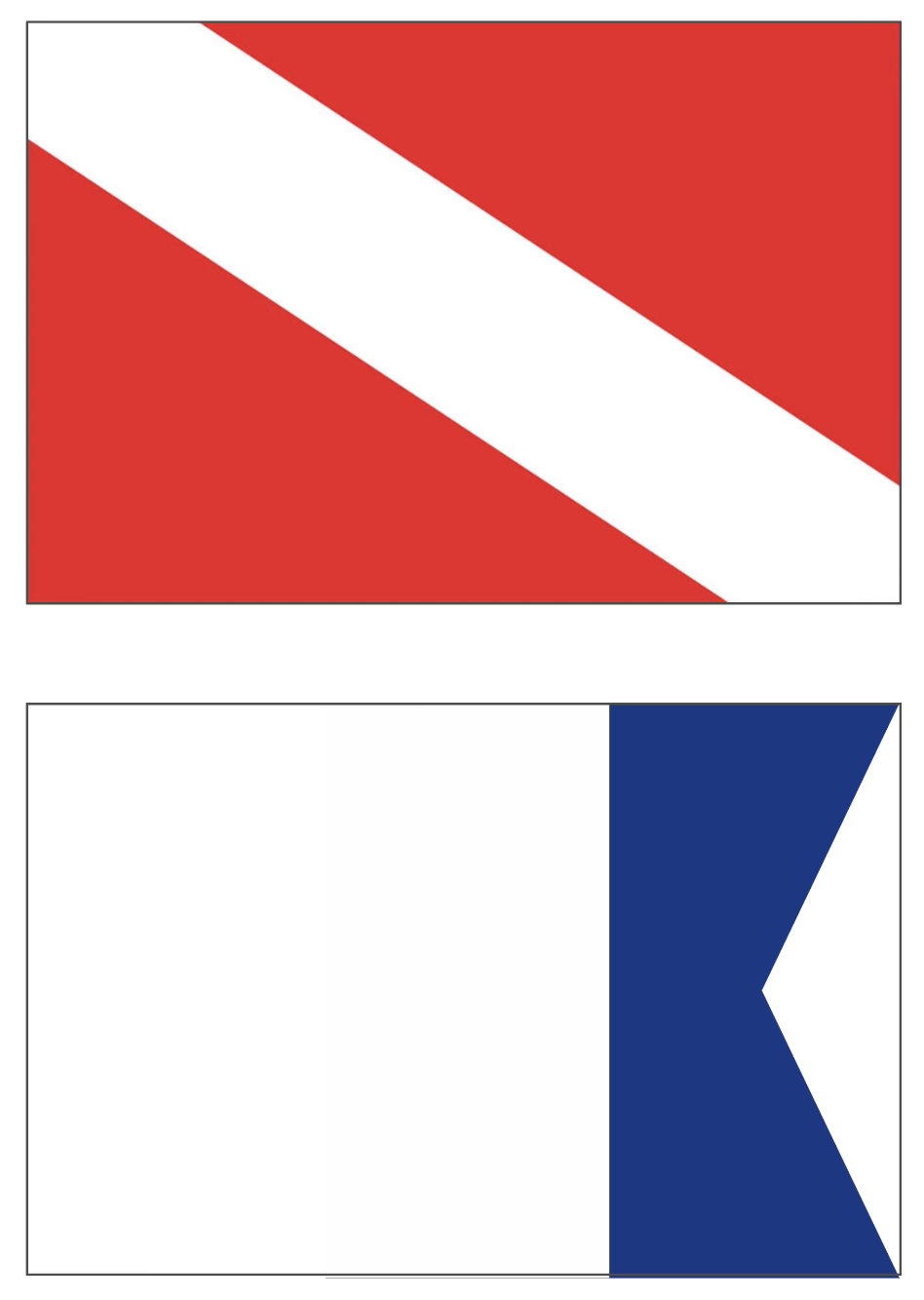
Although both flags indicate that divers are in the water, they serve slightly different purposes depending on where you are boating. The Diver Down Flag features a red background with a white diagonal stripe and is most commonly used in North America. It alerts nearby boaters that divers are below the surface and that extra caution should be used. The Alpha Flag is blue and white and is recognized internationally. Rather than simply warning that divers are in the water, it signals that the vessel has divers deployed and has a limited ability to maneuver. Regardless of which flag is required in your area, both exist for the same reason: improving safety and helping protect everyone enjoying the water.
Learn Your Local Dive Flag Laws
Although the purpose of the dive flag remains the same, individual boating regulations vary by state and local jurisdiction. Before every trip, it’s important to understand the rules where you’ll be diving.
Sherri's Safety Tip
“Safety Tip: I love learning where traditions come from, but when it comes to dive flags, their history isn’t just interesting, it’s practical. Every time you display one correctly, you’re carrying on a safety tradition that’s been protecting divers for generations. It’s one small step that can make a big difference on the water.”
- Sherri
The modern diver down flag was developed in the United States during the 1950s as recreational scuba diving became more popular. Its distinctive red background with a white diagonal stripe was created to alert nearby boaters that divers were below the surface. Over time, it became one of the most recognized boating safety symbols in North America.
The diver down flag is widely credited to Denzel James Dockery, a U.S. Navy veteran and diving enthusiast. During the early 1950s, he introduced the red flag with a white diagonal stripe to improve safety for recreational divers. The design was quickly adopted throughout the diving community and remains in use today.
The bright red background was chosen because it is highly visible on the water, while the white diagonal stripe makes the flag easy to recognize from a distance. Together, these colors create a distinctive warning signal that alerts nearby boaters to use caution because divers are below the surface.
Dive flags first appeared during the early 1950s as recreational scuba diving rapidly expanded in the United States. As more divers began sharing waterways with recreational boaters, a standardized warning flag became an important safety tool and was soon adopted throughout the diving community.
The diver down flag features a red background with a white diagonal stripe and is commonly used in North America to indicate that divers are in the water. The Alpha flag is blue and white and is recognized internationally, signaling that a vessel has divers deployed and has limited ability to maneuver. Which flag is required depends on local laws and the type of diving activity.
The diver down flag is widely recognized throughout the United States, Canada, and many parts of the Caribbean. However, many countries outside North America primarily use the International Code Alpha flag for diving operations. Before diving, it is always a good idea to review the local regulations for your destination.
Dive flags help protect divers by alerting nearby boaters that people are below the surface. They encourage reduced speeds, increased awareness, and safer boating practices around dive sites. Properly displaying a dive flag is one of the simplest and most effective ways to improve safety on the water.
A quality marine dive flag should be highly visible, double-sided, and built to withstand harsh marine conditions. At No Tops Nation, our premium marine dive flags are made with durable materials, reinforced stitching, and vibrant colors to help maximize visibility on the water. Whether you’re boating, scuba diving, snorkeling, or freediving, they’re designed to provide dependable performance trip after trip. Shop our collection here:
If you believe life is better on the water, you’re already part of the No Tops Nation mindset. Whether you’re boating, relaxing at your favorite beach, or planning your next island adventure, our apparel was designed for people who love life outdoors.
👉 Shop Mermaid Rash Guards, Tank Tops, Women’s Shorts, and Boat Flags Today
*all purchases will generally ship 2–5 business days or better after receipt of purchase. If you have any additional questions, please contact me. I am currently only shipping to United States addresses only.