
Secure Checkout • Made in the USA
When Did the Female Body Become Offensive?
For centuries, the female body has been painted, sculpted and celebrated as a symbol of beauty, femininity and life. Those works now hang in some of the greatest museums in the world. Yet today, show a woman's nipple in the wrong place and suddenly it's considered offensive. The human body didn't change. Somewhere along the way, the way we look at it did.
So When Did Everything Change?
Sometimes I look around and honestly wonder how we got here. For centuries, the female body has been painted, sculpted and celebrated by some of the greatest artists in history.
Today, those works hang in museums, appear in textbooks and are considered masterpieces.
Yet somehow, show a woman’s nipple in the wrong place today and suddenly everyone has an opinion. The human body did not change. So when did the way we look at it change?
We Used to Call It Art
For centuries, artists painted and sculpted the human body because they saw something worth capturing.
Beauty. Strength. Vulnerability. Femininity. Motherhood. Desire. Life.
Walk through an art museum and you don’t have to look very far before finding a nude woman.
And nobody is running through the museum trying to throw a towel over her.
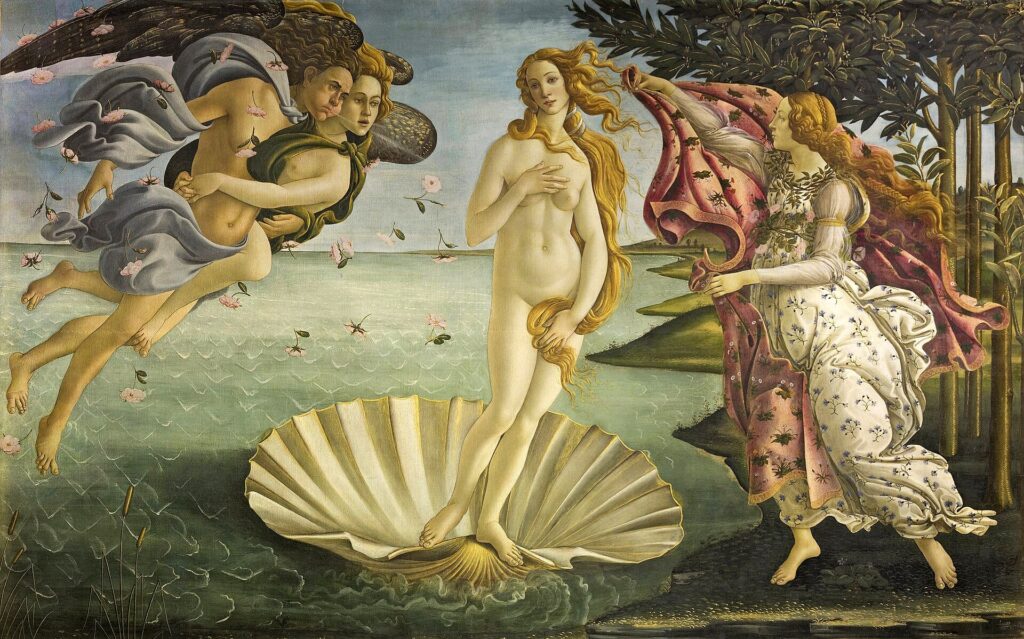
Some of the most recognizable works of art in the world show women partially or completely nude.
We study them. We preserve them. We spend millions of dollars protecting them. People travel across the world just to stand in front of them.
Apparently, nipples become much less threatening once you put them in a gold frame.
Venus Didn't Need a Bikini Top
Botticelli’s The Birth of Venus was painted more than 500 years ago, and today it remains one of the most recognizable paintings in the world.
There stands Venus, the goddess associated with love and beauty, arriving from the sea on a giant shell. She isn’t being portrayed as obscene. She isn’t something that needs to be hidden.
She’s beautiful.
She’s feminine.
And yes, she has breasts.
Nobody looks at The Birth of Venus and thinks the painting would have been much more tasteful if Botticelli had just given her a bikini top.
The Uffizi Gallery, where the painting lives today, describes Venus as a symbol of love and beauty. Five centuries later, millions of people still see her that way.
So I can’t help asking myself: if the female body can represent beauty on a museum wall, why does that same body suddenly become offensive somewhere else?
Somewhere Along the Way, We Changed the Rules
I’m not pretending everyone throughout history agreed about nudity. They didn’t. Every generation has had its own ideas about modesty, sexuality and what should or shouldn’t be shown in public.
But somewhere along the way, particularly when it comes to women, we created some pretty strange contradictions.
A man’s bare chest is normal.
A woman’s breast feeding her baby is natural, although somehow even that can make people uncomfortable.
A woman’s breast in a 500-year-old painting is art.
But show a woman’s nipple in another context and suddenly we need warnings, restrictions and rules.
Same anatomy. Completely different reaction.
And I think that’s worth questioning.
Why Does a Nipple Make People So Uncomfortable?
Maybe this is the question underneath all of it.
Why?
Why have we decided that one particular part of the female body automatically makes something sexual?
Women have breasts. Women have nipples. So do men.
That doesn’t mean every woman wants to walk around topless. I certainly don’t believe anyone should have to expose anything they don’t want to expose.
That’s the point.
This isn’t about telling women what they should wear.
It’s about questioning why society gets to decide what women must wear.
The Free the Nipple movement is sometimes reduced to exactly what its name sounds like: women wanting to walk around without shirts.
But the larger conversation has always been more interesting than that.
It’s about equality. It’s about censorship. It’s about why essentially the same part of the human anatomy is treated differently depending on whether it belongs to a man or a woman.
And it’s about choice.
I don’t believe every woman should go topless.
I believe every woman should be able to make decisions about her own body without automatically being told that her body is offensive.
There’s a very big difference.
Maybe the Human Body Was Never the Problem
When I look at paintings like The Birth of Venus, I’m reminded that there is nothing new about the female body.
We’ve been painting it, sculpting it, celebrating it and debating it for thousands of years.
What keeps changing is us.
Our rules change. Our attitudes change. What society considers acceptable changes.
The woman’s body doesn’t.
So maybe the better question isn’t, “Why is that woman showing her body?”
Maybe it’s:
“Why does seeing it bother us so much?”
And maybe we should be willing to have that conversation.
“I didn’t start No Tops Nation because I wanted to tell women how to dress. Actually, it’s pretty much the opposite. I started it because I believe women should be comfortable being themselves. Some women will never go topless in their lives, and that’s perfectly fine. Others couldn’t care less who sees their nipples, and that’s fine too. To me, confidence isn’t about how much or how little you’re wearing. It’s about being comfortable enough with yourself to make that decision for yourself.”
- Sherri
Wear What Makes You Feel Like You
No Tops Nation was created around a pretty simple idea: your body, your confidence, your choice.
Our apparel isn’t about telling women to cover up or take something off. It’s about having a little fun, challenging a few outdated ideas and wearing something that represents the freedom to be yourself.
Whether you’re on the boat, at the beach, in the water or just living life your way, welcome to the Nation.
Whether you’ve been here from the beginning or just discovered us today, I’m glad you’re here.
👉 Shop Mermaid Rash Guards, Tank Tops, Women’s Shorts, and Boat Flags Today
Best Sellers


So come join me and live life a little more like a mermaid.
*all purchases will generally ship 2–5 business days or better after receipt of purchase. If you have any additional questions, please contact me. I am currently only shipping to United States addresses only.